

The Business Impact of UI/UX Design: Why Companies That Invest in Design Win
In today’s digital-first world, a company’s website or digital product often serves as the first interaction between a business and its customers. Within seconds, users form impressions about credibility, professionalism, and trustworthiness based on what they see and experience.
This is where UI (User Interface) and UX (User Experience) design play a crucial role.
Great design is no longer just about aesthetics. It has become a strategic business tool that influences how users interact with digital products, how long they stay, and whether they ultimately become customers.
Companies that prioritize thoughtful design consistently outperform competitors because they create experiences that are intuitive, engaging, and efficient.
This article explores why UI/UX design has become one of the most important investments businesses can make and how it directly impacts growth, engagement, and revenue.
Why User Experience Matters More Than Ever
Modern users have extremely high expectations when it comes to digital products. With thousands of websites and apps competing for attention, users quickly abandon platforms that feel confusing or difficult to use.
A well-designed user experience ensures that visitors can navigate effortlessly, find information quickly, and complete their goals without frustration.
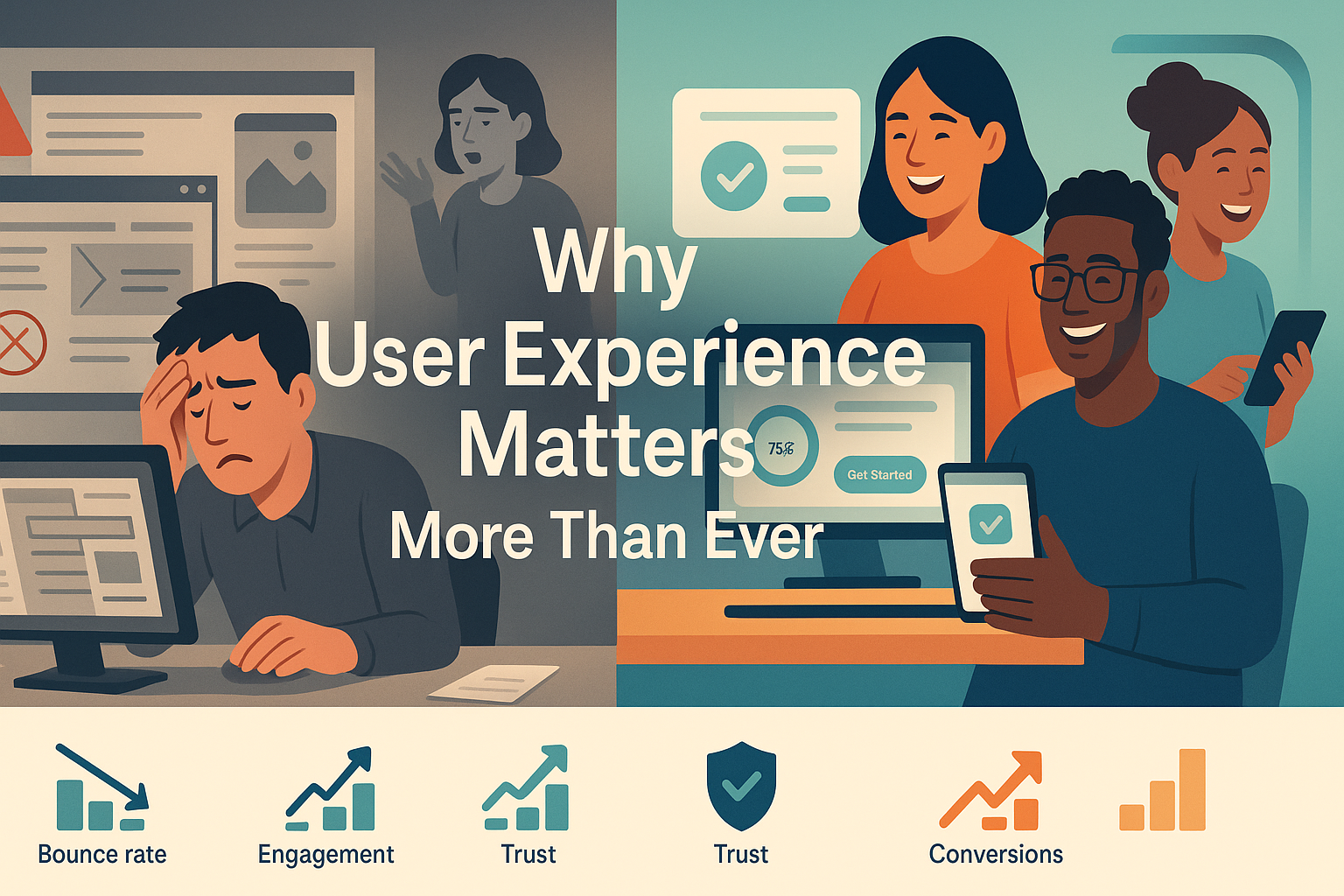
When businesses ignore UX design, they often experience problems such as:
- High bounce rates
- Low engagement
- Reduced customer trust
- Lower conversion rates
On the other hand, products that focus on usability tend to keep users engaged longer and guide them naturally toward meaningful actions such as signing up, making purchases, or requesting services.
Simply put, better user experience leads to better business results.
Understanding the Difference Between UI and UX
Although the terms UI and UX are often used interchangeably, they represent two distinct but interconnected aspects of digital design.
User Interface (UI) focuses on the visual and interactive elements users see and interact with. This includes:
- Buttons
- Color systems
- Typography
- Layout structures
- Interactive components
UI design ensures that a product looks visually appealing and communicates information clearly.
User Experience (UX) focuses on the overall journey users take while interacting with a product. It involves understanding user behavior, identifying pain points, and designing solutions that make interactions smoother and more efficient.
UX designers consider factors such as:
- navigation flow
- information hierarchy
- usability testing
- user research
When UI and UX work together effectively, the result is a product that is not only attractive but also highly functional.
How UI/UX Design Directly Impacts Business Growth
Many businesses underestimate how strongly design affects their bottom line. However, research consistently shows that thoughtful design improves key performance metrics.
Some of the most noticeable benefits include:
Increased Conversion Rates
A clear and intuitive interface makes it easier for users to complete actions such as signing up, booking services, or making purchases. Small design improvements often lead to significant increases in conversion rates.
Higher Customer Satisfaction
When users enjoy interacting with a product, they are more likely to return and recommend it to others. Positive experiences build long-term customer relationships.
Reduced Development and Support Costs
Well-designed products reduce confusion and errors. This means fewer customer support requests and fewer costly redesigns later.
Stronger Brand Perception
Professional design signals credibility and reliability. Users often associate well-designed products with high-quality services.
For companies competing in crowded markets, great design can become a powerful competitive advantage.
The Role of Design in Building Customer Trust
Trust is one of the most valuable assets a brand can have. Customers are far more likely to engage with businesses they perceive as professional and reliable.
Design plays a key role in establishing this trust.
Elements such as:
- consistent branding
- clean layouts
- fast loading pages
- intuitive navigation
all contribute to how trustworthy a digital product appears.
Poor design, on the other hand, can create doubts about a company’s credibility even if the service itself is excellent.
Businesses that invest in high-quality design signal to customers that they care about user experience and attention to detail.
Why Design Should Be Part of Business Strategy
Forward-thinking companies understand that design is not just a decorative element. It is a strategic tool that influences how customers perceive and interact with a brand.
By integrating design thinking into business strategy, organizations can:
- identify user needs more effectively
- create more intuitive products
- improve customer satisfaction
- increase long-term loyalty
Design-driven companies often innovate faster because they continuously test ideas, gather feedback, and refine user experiences.
For startups and growing businesses alike, investing in design early can prevent costly usability problems later.
As a Result
UI/UX design has evolved into a fundamental component of modern business success. As digital experiences continue to shape how customers interact with brands, companies must prioritize usability, accessibility, and thoughtful design.
Businesses that invest in professional UI/UX design create products that users enjoy interacting with. These experiences translate into stronger engagement, higher conversions, and long-term customer trust.
In an increasingly competitive digital environment, design is no longer optional. It is one of the most powerful tools businesses can use to stand out and grow.